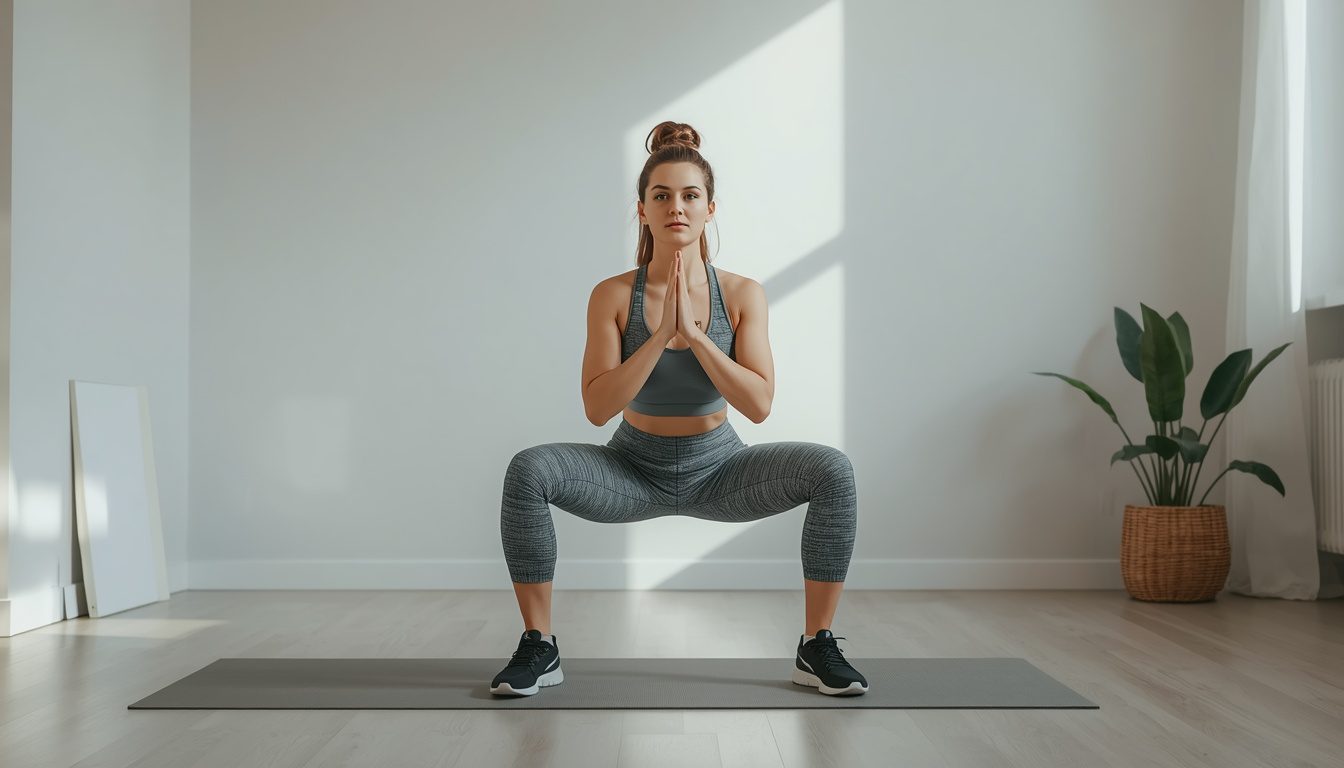
This beginner’s guide to getting fit at home breaks the whole process into 7 simple steps, because “just start exercising” is genuinely unhelpful advice when you don’t know where to begin. No gym membership, no expensive equipment, and no assumption that you already know what you’re doing — just a clear starting point.
If you’ve tried to get fit before and it didn’t stick, this beginner’s guide to getting fit at home is built around the things that actually derail most people early on — unclear goals, an all-or-nothing mindset, and routines that are too complicated to keep up.
Quick answer: set one simple goal, clear a small space at home, learn 3-4 basic bodyweight moves, train 2-3 times a week, track progress loosely, get the basics of eating right, and prioritise consistency over intensity for the first month.
🏠 The 7-Step Beginner’s Guide to Getting Fit at Home
Step 1: Set One Simple Goal
“Get fit” is too vague to actually act on. Pick one specific, simple goal instead — walk 20 minutes daily, do bodyweight exercise 3 times a week, or touch your toes comfortably within a month. A clear target makes it obvious whether you’re actually making progress.
Step 2: Clear a Small Space
You don’t need a home gym — a 2×2 metre patch of floor is enough for almost every bodyweight exercise. Having it already clear removes the “I need to move furniture first” excuse before it can talk you out of starting.
Step 3: Learn 3-4 Foundational Moves
Squats, push-ups (or knee push-ups), glute bridges, and planks cover most of what a true beginner needs. Master the form on these before adding anything more complicated — they’re the foundation nearly every other exercise builds on.
Step 4: Train 2-3 Times a Week
Three short sessions a week, with a rest day between each, is genuinely enough to build a real habit and see progress in the first month. Daily training sounds more committed, but it usually leads to burnout faster for someone brand new to exercise.
Step 5: Track Progress Loosely
A simple note of reps, sets, or minutes walked is enough — you don’t need a complicated spreadsheet or app. Seeing “3 sets of 8 push-ups” become “3 sets of 12” over a few weeks is motivating in a way that guessing never is.
Step 6: Get the Nutrition Basics Right
You don’t need a strict diet to start getting fit — just the basics: more vegetables, more protein, less sugary drinks and processed snacks. Overhauling your whole diet on day one alongside a new exercise habit is usually too much change at once.
Step 7: Prioritise Consistency Over Intensity
A moderate workout done three times a week for a month beats one brutal session followed by two weeks of soreness and avoidance. This is the single biggest factor separating people who stick with fitness long-term from people who don’t.
📋 Beginner’s Guide to Getting Fit at Home — 4-Week Starting Plan
| Week | Focus | Goal |
|---|---|---|
| Week 1 | Learn the 4 foundational moves | 2 sessions, focus on form over reps |
| Week 2 | Add a 3rd weekly session | Consistency, not intensity |
| Week 3 | Increase reps or sets slightly | Small, measurable progress |
| Week 4 | Review and adjust | Decide what’s working before adding more |
💪 Why This Beginner’s Guide Focuses on Simplicity
Most fitness content aimed at beginners is actually written for people who are already somewhat active — it moves too fast and assumes too much. This beginner’s guide to getting fit at home deliberately keeps things simple, because overcomplication is one of the main reasons people quit within the first few weeks.
According to the NHS’s own Get Active guidance, the goal for adults is around 150 minutes of moderate activity a week — but it also stresses starting small and building up gradually, which is exactly the approach this 7-step plan follows rather than throwing a beginner straight into an intense routine.
None of these seven steps require anything you don’t already have. That’s intentional — the biggest barrier for most beginners isn’t ability, it’s the friction of getting started in the first place.
🎯 Staying Motivated Beyond Week One
Starting is the easy part of any beginner’s guide to getting fit at home — the real challenge shows up around week two or three, once the initial enthusiasm fades. A few things help carry you through that gap:
- Schedule sessions like appointments — putting them in a calendar makes them far harder to quietly skip than a vague intention to “exercise later”
- Find one small win each week — an extra rep, a slightly longer plank hold, or simply not skipping a scheduled session all count as genuine progress
- Tell someone what you’re doing — a small amount of social accountability, even just mentioning it to a friend, measurably increases follow-through
- Expect the motivation dip — knowing in advance that week two or three often feels harder makes it far less likely to derail you when it happens
- Revisit your one simple goal from Step 1 — a clear “why” is what carries you through the sessions where motivation alone isn’t enough
None of this is about willpower in the way it’s often talked about. It’s about removing enough friction and adding enough structure that showing up stops depending on how motivated you happen to feel on any given day.
⚠️ Common Beginner Mistakes to Avoid
- Doing too much in week one — enthusiasm on day one often leads to soreness that keeps you off exercise for the following week
- Buying equipment before building the habit — bodyweight training alone is enough for the first several weeks; equipment can wait
- Comparing yourself to advanced content online — most visible fitness content is made by people years into training, not a fair beginner benchmark
- Treating a missed session as a failure — missing one day doesn’t undo progress; missing three straight weeks does
- Skipping any warm-up — a couple of minutes of light movement before exercising reduces injury risk, especially in the first few weeks
If you have any existing health conditions, injuries, or haven’t exercised in a long time, it’s worth checking with a doctor before starting a new fitness routine — this guide covers general starting points, not personalised medical advice.
Recommended Fitness Essentials
None of these are required to start, but they help once bodyweight training starts feeling easy:
- Non-Slip Yoga Mat — comfortable cushioning for floor-based moves like planks and bridges
- Resistance Bands Set — great for mobility, stretching, and adding resistance to bodyweight moves
- Adjustable Dumbbells — for progressive strength training once bodyweight feels too easy
- Kettlebell (8–12kg) — excellent for fat-burning, strength, and conditioning as a next step
- Foam Roller — helps with recovery, muscle tension, and flexibility between sessions
Browse options on our Amazon fitness essentials store.
📘 Want a Full Structured Plan to Follow?
These 7 steps are a genuinely solid starting point, but a structured plan removes the guesswork about what to do next. Our Home Workout Guide covers exactly that — simple, equipment-light routines built to progress with you as you get fitter.
❓ Frequently Asked Questions
Do I need any equipment to start getting fit at home?
No. This beginner’s guide to getting fit at home is built entirely around bodyweight exercises — a small clear space is all you actually need to start.
How long until I notice a difference?
Most beginners notice improved energy and slightly easier movement within 2-3 weeks, with visible fitness changes typically showing after 6-8 weeks of consistent training.
What if I miss a session?
Just pick back up at your next scheduled session. One missed day has no real impact on progress — the habit matters far more than any single session.
Is this guide suitable for any age or fitness level?
The seven steps here are deliberately general and low-impact, suitable for most healthy adults starting from any fitness level. If you have specific health concerns, checking with a doctor first is a sensible extra step.
🔥 Recommended Health & Fitness Products
These products can support your weight loss, energy, and overall wellness journey as you start getting fit:
Ikaria Lean Belly Juice
A natural formula designed to support metabolism and energy.
👉 Learn more
LeanBiome
A gut-health focused supplement that may help with cravings and weight management.
👉 Learn more
The Smoothie Diet (21-Day Program)
A simple, beginner-friendly plan that uses smoothies to support weight loss and better nutrition.
👉 Learn more
🔥 Final Thoughts
This beginner’s guide to getting fit at home works because every step is genuinely achievable — no gym, no expensive equipment, and no assumption you already know what you’re doing. Set your goal, clear your space, learn the basics, and let consistency do the rest.
Fitness isn’t built in the first week. It’s built in the fourth, eighth, and twelfth week you show up anyway — and these seven steps are simply designed to make showing up as easy as possible.
🏋️ Related Guides
This post may contain affiliate links. I may earn a small commission at no extra cost to you.
