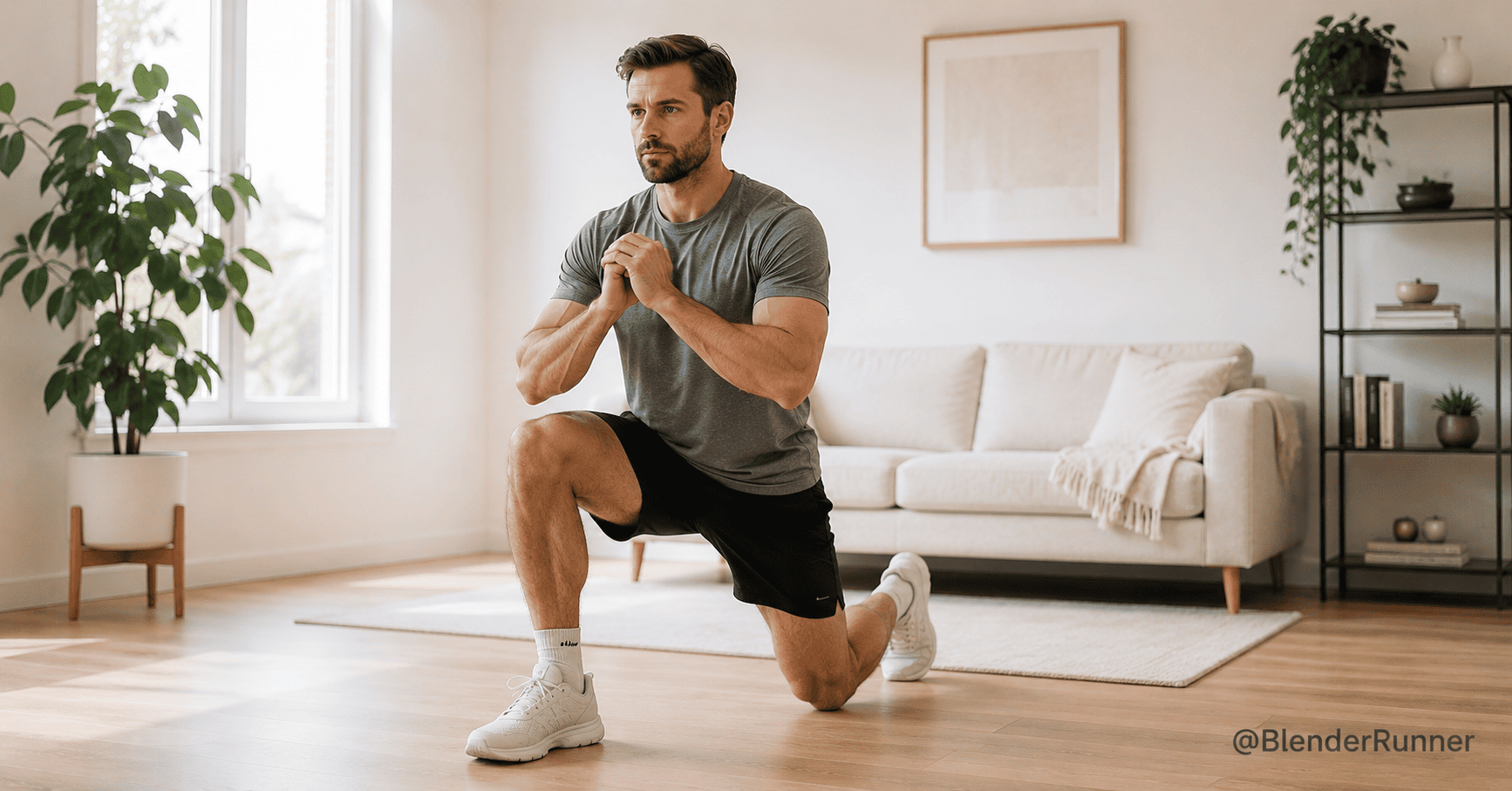
Can a 10-minute home workout help you lose weight? The short answer is yes, more than most people expect — and the research behind it has become one of the more genuinely surprising findings in fitness science recently. If you’ve been putting off exercise because you don’t have an hour to spare, or you’ve tried and abandoned longer routines more times than you’d like to admit, this is worth reading before you write off short workouts as not worth the effort.
What Does the Research Actually Say About 10-Minute Workouts?
One study found that a 10-minute session including at least a minute of high-intensity effort produced similar aerobic and metabolic benefits to a longer, moderate-intensity workout. Separate research comparing workouts under and over 10 minutes found that hitting the full 10-minute mark led to slightly better results for body weight and BMI compared to shorter sessions. The research base here is still developing rather than exhaustive, but the consistent theme across multiple studies is clear: short, focused workouts produce real, measurable benefits — not just a placebo sense of “doing something.”
Can a 10-Minute Home Workout Really Help You Lose Weight?
Yes, with an important caveat. A 10-minute home workout helps most directly through two mechanisms: burning calories during the session itself, and — more significantly — building the consistent exercise habit that tends to predict long-term weight loss success far better than any single workout’s calorie burn does. Ten minutes done daily beats sixty minutes done once a week, almost every time, simply because consistency compounds and inconsistency doesn’t.
Where a 10-minute workout can’t do everything on its own is diet. Weight loss ultimately comes down to calorie balance, and no workout length fully offsets a calorie surplus from food. The honest framing is that a 10-minute home workout is a genuinely effective tool within a broader approach, not a standalone solution regardless of everything else you’re doing.
Why Short Workouts Work Better Than People Expect
Part of the answer is psychological rather than purely physiological. Ten minutes feels achievable on a busy day in a way that an hour-long session doesn’t, which means people are far more likely to actually do it rather than skip it entirely.
A workout you complete beats a longer one you keep postponing, and postponed workouts don’t burn any calories at all. Short sessions also lend themselves naturally to high intensity — you can push harder for 10 focused minutes than you realistically can for 60, and intensity is a meaningful driver of the metabolic benefits research keeps finding in short workout studies.
The Science of “Movement Snacks” and Microdose Fitness
A related and increasingly researched idea is the “movement snack” — short bursts of activity spread through the day rather than one concentrated session. One widely cited calculation published in JAMA Internal Medicine estimated that over 100,000 deaths a year in US adults aged 40-85 could be prevented if people increased moderate-to-vigorous activity by just 10 minutes daily.
Consistent short-duration exercise has also been linked to reduced risk of cardiovascular disease, certain cancers, and dementia in various studies — benefits that go well beyond weight loss alone and reinforce why 10-minute sessions deserve to be taken seriously rather than dismissed as “not a real workout.”
A Sample 10-Minute Home Workout You Can Do Today
Here’s a simple structure: 45 seconds of work, 15 seconds of rest, moving through 10 exercises without equipment.
- Jumping jacks
- Bodyweight squats
- Push-ups (knee push-ups if needed)
- Mountain climbers
- Glute bridges
- High knees
- Plank hold
- Lunges
- Bicycle crunches
- Burpees (or step-back burpees for a gentler option)
That’s exactly 10 minutes, and the format naturally builds in the high-intensity component research consistently points to as the key driver of results.
10-Minute Workouts vs Longer Sessions
| Factor | 10-Minute Workout | 45-60 Minute Workout |
|---|---|---|
| Consistency (realistic adherence) | High — easy to fit in daily | Lower — easier to skip on busy days |
| Calories burned per session | Lower | Higher |
| Intensity typically achieved | Higher (easier to sustain effort) | Variable, often lower average |
| Best for | Busy schedules, building the habit | Those with more available time |
Neither format is objectively better — the right choice depends on your schedule, and expert-reviewed research on mini-workouts increasingly supports the idea that some exercise, done consistently, beats an ideal routine that keeps getting skipped.
How to Make a 10-Minute Home Workout as Effective as Possible
- Include at least one minute of genuinely high-intensity effort — this is the component research ties most closely to the metabolic benefits
- Train to near failure on strength moves where possible, since research links this to strength and endurance gains even in short sessions
- Be consistent rather than occasional — a 10-minute workout done five days a week beats a 45-minute session done once
- Progress over time by adding rounds, reducing rest, or moving to harder exercise variations as the original routine gets easier
Who Benefits Most From Short Workouts?
Beginners and people returning to exercise after time off tend to see the most dramatic relative benefit from 10-minute sessions, since almost any consistent movement is a significant step up from none. They’re also particularly useful for anyone managing joint pain, limited mobility, or a genuinely packed schedule where a longer session simply won’t happen. More advanced exercisers can still benefit, particularly on days where a full session isn’t realistic, but they may need longer sessions on other days to keep progressing toward more advanced strength or endurance goals.
Limitations: What a 10-Minute Workout Can’t Replace
Ten minutes a day is a genuinely strong starting point, but it has real limits. Building significant muscle mass, training for specific athletic performance goals, or making major body composition changes typically benefits from more total weekly training volume than 10 minutes a day provides.
Nutrition also matters more than workout length for weight loss specifically — a 10-minute workout paired with poor eating habits will produce far more modest results than the same workout paired with a reasonable calorie deficit. Our guide to losing belly fat at home with no equipment covers the nutrition side in more depth if you want to build out a fuller plan.
How Long Before You See Results From a 10-Minute Home Workout?
Most people following a daily 10-minute routine consistently start noticing changes in energy, mood, and how clothes fit within 3-4 weeks, with more visible physical changes typically emerging around the 6-8 week mark — a timeline broadly consistent with longer workout programmes, since consistency matters more than session length for how quickly results show up. The scale can lag behind how you actually feel and look, particularly in the first few weeks, so it’s worth tracking more than just weight if you want an accurate picture of progress.
Common Mistakes That Reduce a 10-Minute Workout’s Effectiveness
- Going through the motions at low intensity rather than genuinely pushing effort during the high-intensity portions
- Skipping the workout on “bad” days instead of doing a shorter or gentler version — something is almost always better than nothing
- Expecting a 10-minute workout to offset a poor diet entirely, rather than treating both as part of the same overall plan
- Never progressing the routine — sticking with the exact same exercises and intensity for months limits how much further benefit you’ll see
- Treating 10 minutes as a ceiling rather than a floor — it’s a strong minimum effective dose, not necessarily the ideal amount forever
10-Minute Workouts as a Long-Term Habit, Not a Quick Fix
The most useful way to think about a 10-minute home workout isn’t as a shortcut, but as a sustainable floor you can build from. Many people who start with 10 minutes daily find that once the habit is genuinely established, extending sessions or adding a second daily session feels far more manageable than it would have felt starting from zero. The habit itself — showing up daily, even briefly — tends to be the harder part to build, and it’s exactly what a 10-minute commitment is designed to make easier.
Modifying a 10-Minute Home Workout for Your Fitness Level
The same basic 10-minute structure scales well across fitness levels with small adjustments. Complete beginners can reduce work intervals to 30 seconds with 30 seconds of rest, and swap higher-impact moves like burpees for gentler alternatives like step-touches or modified mountain climbers.
More advanced exercisers can shorten rest periods to 10 seconds, add a second round for a 20-minute session on days with more time, or increase intensity further with jump variations of each exercise. The goal at every level is the same: finish the 10 minutes having genuinely challenged yourself, not simply having moved for 10 minutes at an easy, comfortable pace.
Staying Consistent With a 10-Minute Home Workout
The biggest predictor of whether a 10-minute home workout actually delivers results isn’t the exact exercises chosen — it’s whether you keep doing it. Pick a consistent time of day, ideally tied to an existing habit like right after your morning coffee or right before your evening shower, since anchoring a new habit to an existing one makes it far more likely to stick.
Track your streak somewhere visible, even something as simple as a tick on a calendar, since visible progress tends to reinforce the habit more than most people expect. And on days motivation is genuinely low, remind yourself the commitment is only 10 minutes — that’s usually enough to get started, and starting is most of the battle.
Want to build cardio fitness on your non-strength days? Our Zone 2 cardio guide and Japanese walking method guide are both excellent low-equipment options, and our walking yoga guide works well for active recovery days. If you want to combine all of this into one structured weekly plan, see our hybrid training guide.
Frequently Asked Questions
Can a 10-minute home workout really help you lose weight?
Yes — research shows 10-minute workouts, particularly those including high-intensity effort, produce measurable metabolic and calorie-burning benefits, and the consistency they enable often matters more for long-term weight loss than any single session’s calorie burn.
Is a 10-minute workout as good as a 30-minute workout?
Not calorie for calorie — longer workouts generally burn more total calories per session. But a 10-minute workout done consistently every day often beats a longer workout done inconsistently, since adherence matters more than any single session’s length.
How many calories does a 10-minute home workout burn?
This varies significantly by intensity and body weight, but a high-intensity 10-minute circuit can burn roughly 80-150 calories, comparable to a much longer session at lower intensity.
Do I need any equipment for a 10-minute home workout?
No — bodyweight exercises like squats, push-ups, and mountain climbers are enough to build an effective 10-minute routine with no equipment required.
Is it better to do one 10-minute workout or split it into shorter movement snacks?
Both approaches have research support. One continuous 10-minute session with a high-intensity component is well studied for metabolic benefits, while spreading shorter bursts through the day (movement snacks) is linked to broader health benefits like improved blood sugar regulation. Either is a reasonable choice depending on what fits your schedule better.
Can beginners start with a 10-minute home workout?
Yes — a 10-minute routine is often an ideal starting point for beginners specifically, since it’s achievable enough to build consistency without the intimidation factor of a longer, more demanding session.
Want a complete structured plan? Our Home Workout Guide lays out a full no-equipment programme, £9.99 on Payhip.
Enjoyed this guide? Follow us on Telegram or join our WhatsApp channel for more evidence-based training guides, and check out our body recomposition guide if you want to build more muscle alongside losing fat.
Affiliate disclosure: This post contains affiliate links. We may earn a small commission at no extra cost to you if you make a purchase through them.
